


From Mining Tools to Medical Components: INSIZE Hardness Testing in Action
20-11-2026
Hardness testing supports quality control from incoming materials through production to finished products. The requirements vary with the material, workpiece geometry and testing environment. Portable testing allows large mining tools to be inspected where they are stored, while thin-walled medical components require small indentations and low test forces.
These six applications show how INSIZE hardness testers are used to address different inspection requirements across mining, aerospace, machining, machine tool manufacturing, telecommunications and medical devices.
Case 1 Mining: Bring the Tester to the Drill Bit
Product Used: INSIZE HDT-L411 Pen-Type Leeb Hardness Tester
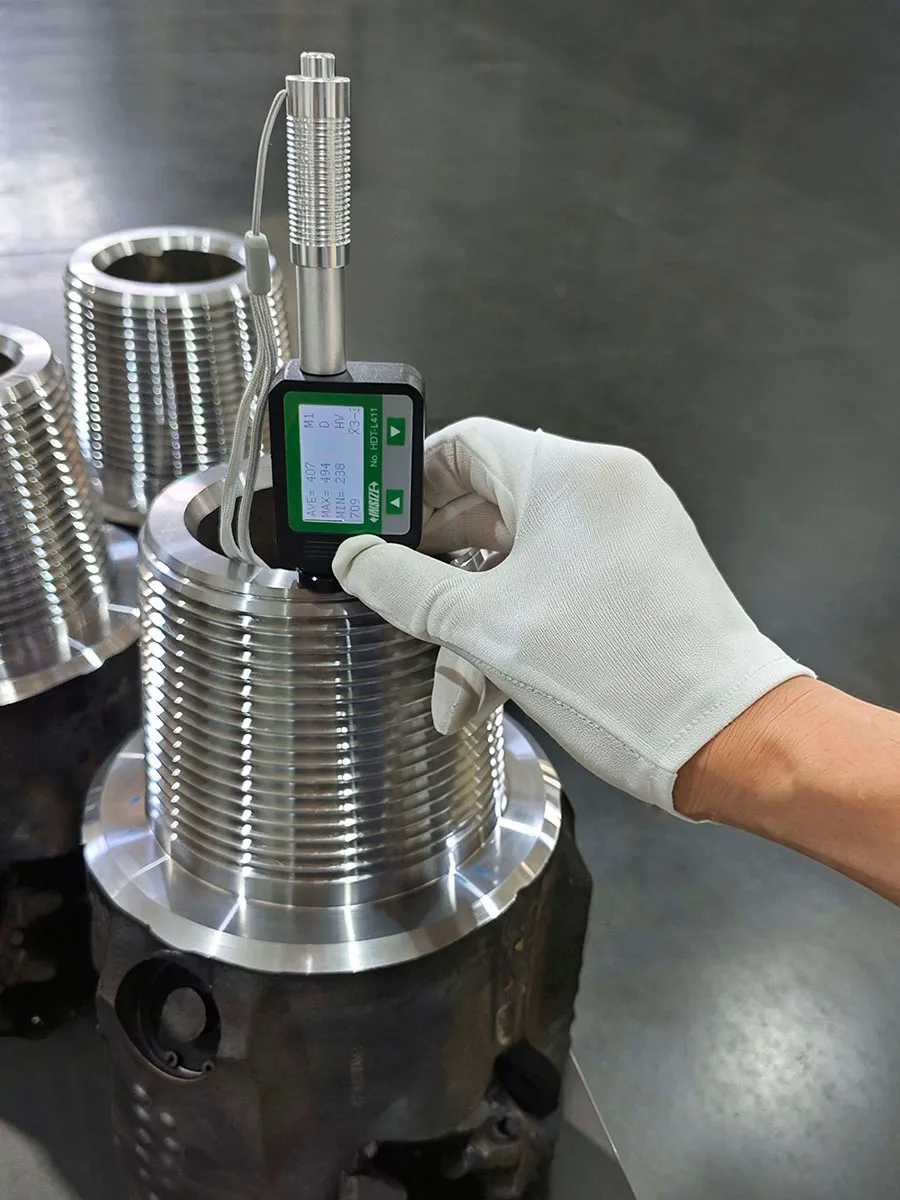
Roller cone drill bits used in mining are large and heavy. Moving them to a laboratory and cutting samples for testing takes time and affects the integrity of the workpiece.
The customer uses the portable HDT-L411 to check surface hardness after heat treatment at the workpiece storage location. Inspectors can test the drill bits without moving them or cutting out samples.
The hardness readings support assessment of the drill tools’ wear resistance and impact resistance. This approach allows inspection at job sites and finished goods storage areas, where transporting heavy workpieces would be difficult.
Case 2 Aerospace: Controlled Hardness Testing for Aerospace Components
Product Used: INSIZE HDT-RT153 Motorized Digital Rockwell/Superficial Rockwell Hardness Tester
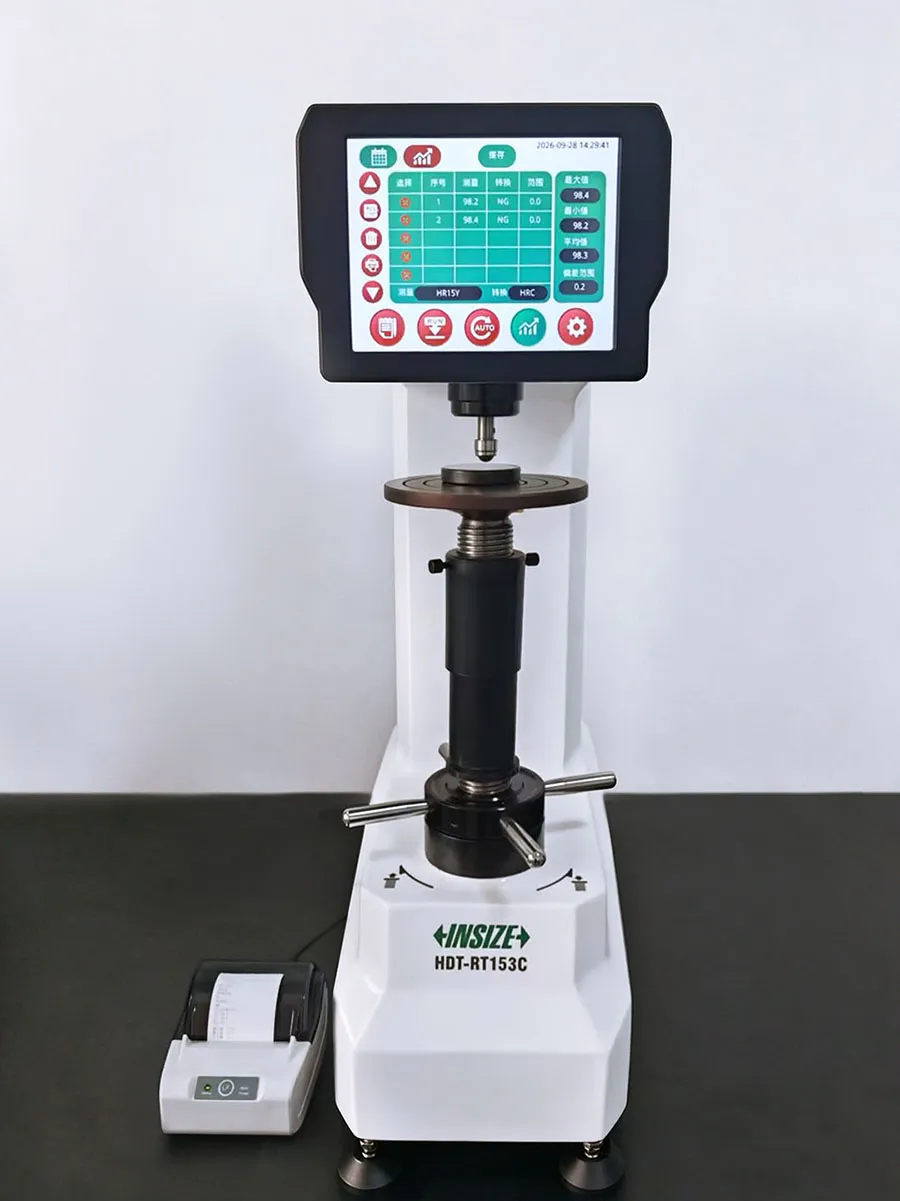
Aerospace component inspection places strict requirements on measurement accuracy and traceability. Metal structural components need controlled hardness testing and records that can be reviewed.
The HDT-RT153 applies test force electronically and supports both Rockwell and Superficial Rockwell testing. Operators can select the required hardness scale for different components, with automatic control of loading, dwell and unloading.
The recorded hardness results provide data for component strength verification and fatigue performance assessment.
Case 3 General Machining: Three Hardness Test Methods in One Instrument
Product Used: INSIZE HDT-BRV330 Motorized Digital Rockwell/Brinell/Vickers Hardness Tester
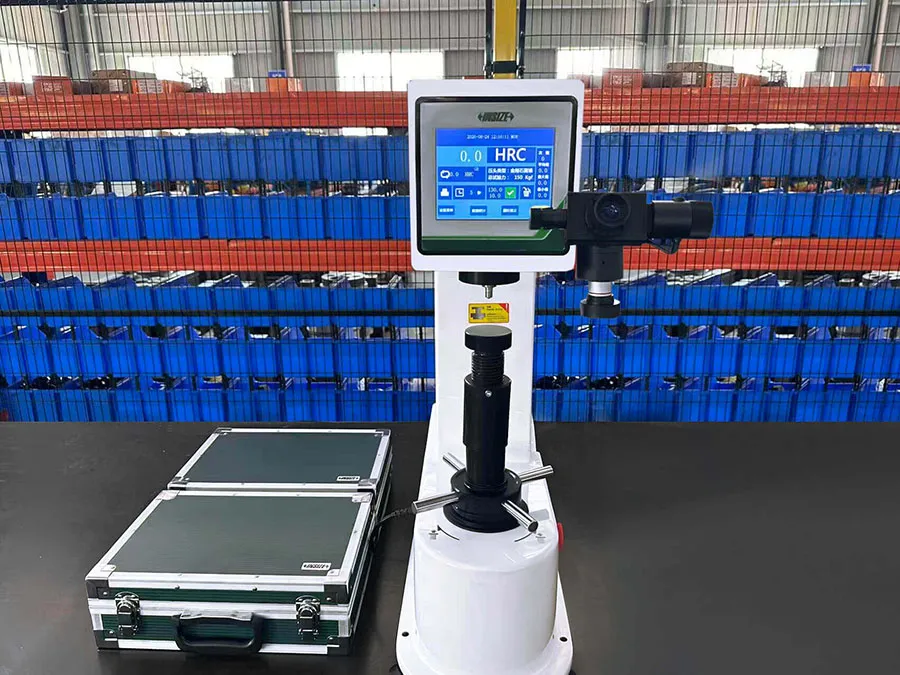
General machining operations handle a range of materials and parts, including softer castings, quenched and tempered steel components, and thin-walled precision parts. One hardness test method may not cover all of these inspection requirements.
The HDT-BRV330 combines Brinell, Rockwell and Vickers testing in one instrument. Operators can select the appropriate method for each workpiece rather than use separate dedicated testers.
The instrument supports incoming material inspection, checks on semi-finished parts and final inspection. Combining the three methods also reduces the number of instruments needed and simplifies the laboratory layout.
Case 4 Machine Tool Manufacturing: Reach Recessed Test Surfaces on Spindle Components
Product Used: INSIZE HDT-DM310 Motorized Digital Rockwell/Superficial Rockwell Hardness Tester (Dolphin-Nose Type)
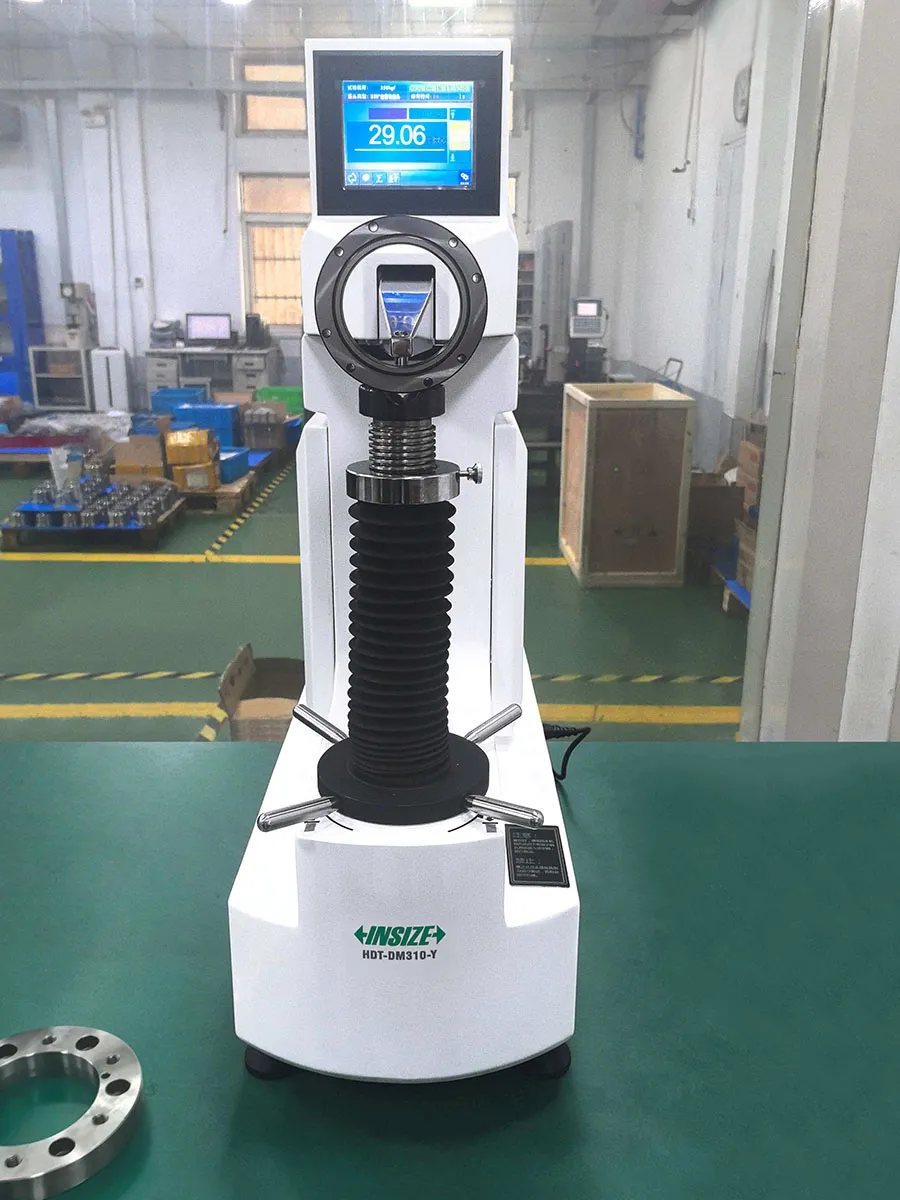
Machine tool spindle components often have steps, recesses and internal features that restrict access to the test surface. These geometries can make it difficult to position a workpiece correctly beneath a conventional hardness tester.
The customer uses the HDT-DM310 to perform Rockwell hardness tests on spindle components. Its dolphin-nose design provides clearance around the indenter, allowing access to recessed and stepped test areas.
Testing at the required location helps inspectors assess heat treatment quality on spindle components.
Case 5 Telecommunications: Direct Digital Readings for Consistent Inspection
Product Used: INSIZE ISH-DSD Digital Shore Durometer
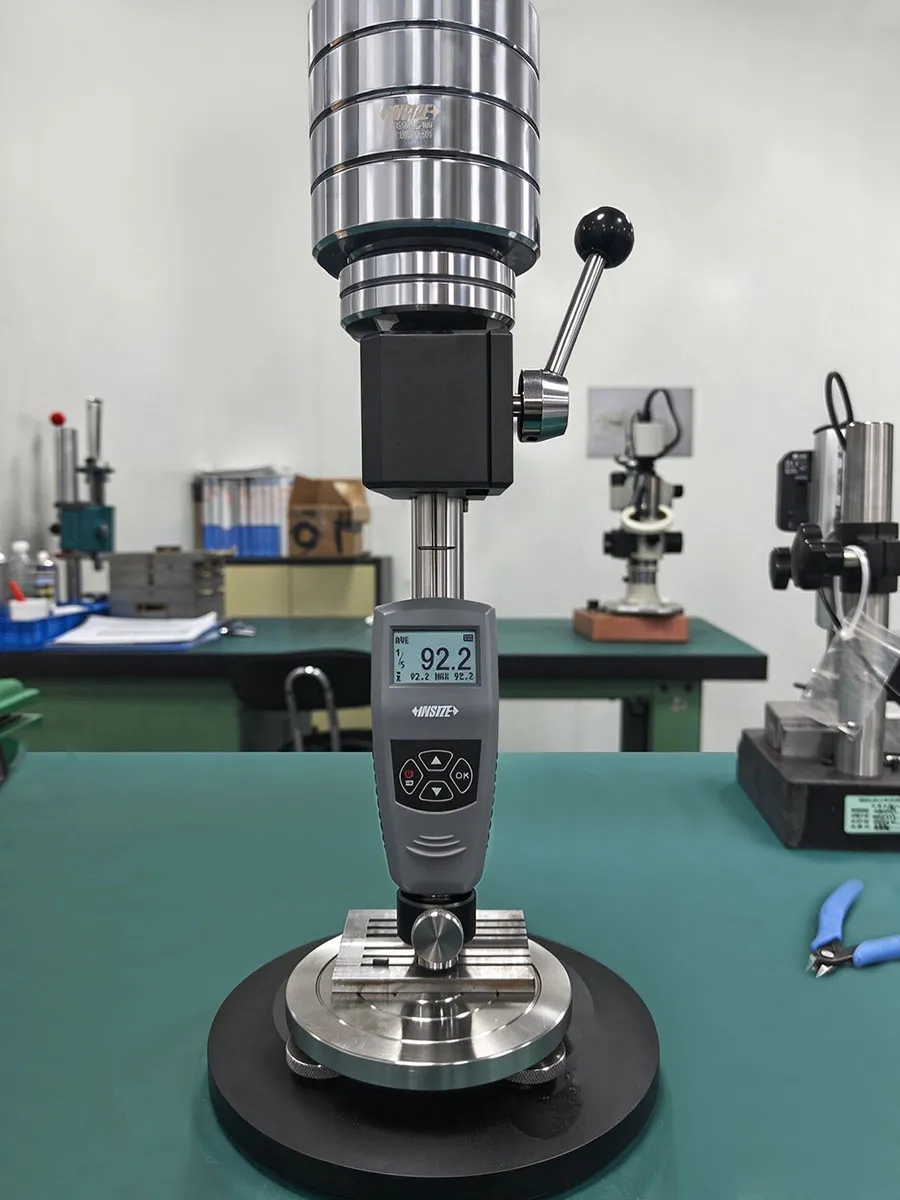
The hardness of rubber and elastic plastic components used in telecommunications equipment affects sealing, vibration damping and fit during assembly.
In this application, the ISH-DSD is used for incoming inspection and finished component testing. Its digital display gives operators a direct Shore D hardness reading, reducing manual reading errors and helping inspectors apply consistent acceptance criteria.
These checks support consistency in the components’ elastic properties and service life, contributing to the long-term stable operation of telecommunications equipment.
Case 6 Medical Devices: Small Indentations for Thin-Walled Titanium Components
Product Used: INSIZE HDT-MVE1300 Digital Micro-Vickers Hardness Tester
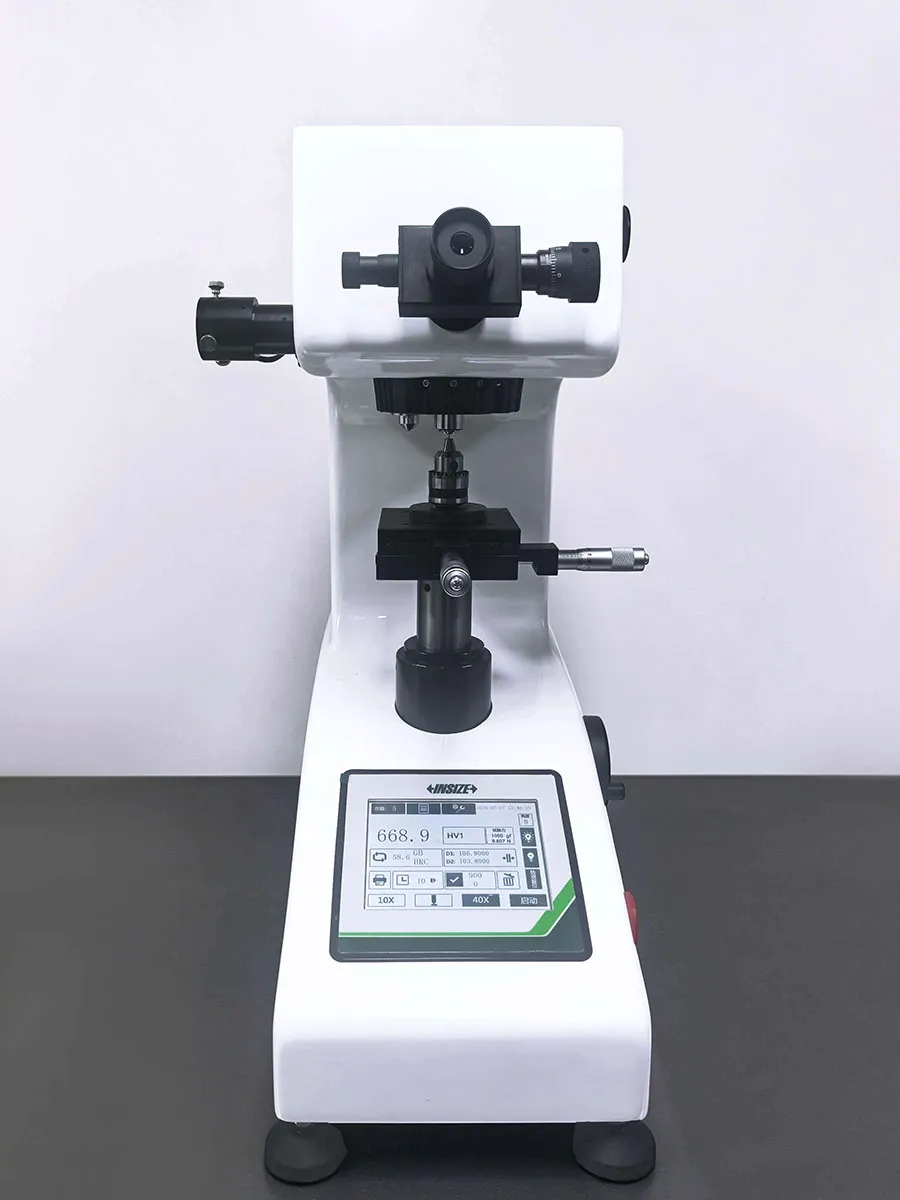
Titanium alloy urological stents are small, thin-walled medical components. Indentations produced by conventional Rockwell or Leeb testing can compromise their structure, making indentation size and test force key considerations.
The HDT-MVE1300 uses a micro-Vickers indenter and selectable test forces from 10 gf to 1 kgf. In this application, small indentations allow hardness testing while preserving the stent’s structural integrity.
The hardness results help assess the mechanical properties of the thin-walled titanium alloy as part of medical device quality control.
Have a similar hardness testing requirement? Contact INSIZE with your workpiece material, dimensions, test location and required hardness scale to discuss a suitable tester.